The future of marketing demands a shift to a contextual spectrum™, using AI to deliver dynamic, personalized content that meets the whole human at the exact moment they are ready to engage.
Most organizations suffer from insight without action; by building a living roadmap that translates data into immediate, mid-term, and strategic initiatives, brands can transform scattered information into a force for organizational growth.
As digital health tools grow, so does consumer overwhelm. Our latest research explores how to restore trust and engagement by designing for the whole human—prioritizing simplicity and empathy over digital noise.
Agentic AI shifts organizations from rule-based automation to systems that reason, act, and learn, requiring leaders to define clear boundaries for delegated decisions and autonomous execution.
Every innovation becomes the next breakthrough’s stepping stone. In technology, mastering one invention simply opens the door to new possibilities. When it comes to marketing, omnichannel once represented the new frontier of integrated consumer experiences. Just as creating strategies by and for each channel was at one point our go-to model.
Marketing teams used to build content for personas by channel—newspapers, TV, in-store signage, email, and so on. The purpose was to ensure their pre-defined groups of consumers received a brand message no matter what channel they used.
When we recognized that people use and cross multiple channels, we adopted omnichannel as our primary mental model. With this approach, we put the person at the center instead of the channel and focused on ensuring a consistent brand message and unified experience no matter where the consumer engaged.
And, here we are on another stepping stone in front of an open door. To truly put the whole human being at the center, we need to reorient our strategy from channels to context. Our goal becomes delivering brand value at the exact moment a consumer is ready to receive it–instead of being everywhere all at once.
From Personas & Channels to People & Context
Personas and channels are limiting, and they do not sufficiently empower consumers to make more informed decisions. The problem with our neat little persona boxes and meticulously defined purchase journeys is that real humans refuse to live in or follow them. They have messy, complicated, wonderful lives, changing roles throughout the day and moving through moments with different needs. Channels are no longer static.
It’s time for brands to embrace the fluidity of the human experience and introduce dynamic, composable, constantly evolving content flows based on a person’s need at a given moment. At MERGE, we call this future a contextual spectrum. We are reorienting from channels to context; from brand-owned journeys to organic brand moments; from personas to whole humans. Channels are no longer static and defined; instead, we have content flows that are dynamic, composable, and constantly evolving from device to device and experience to experience. This shift to a contextual spectrum enables organic brand moments, helps us achieve infinite individualism, and is the core philosophy that drives our AIgency.
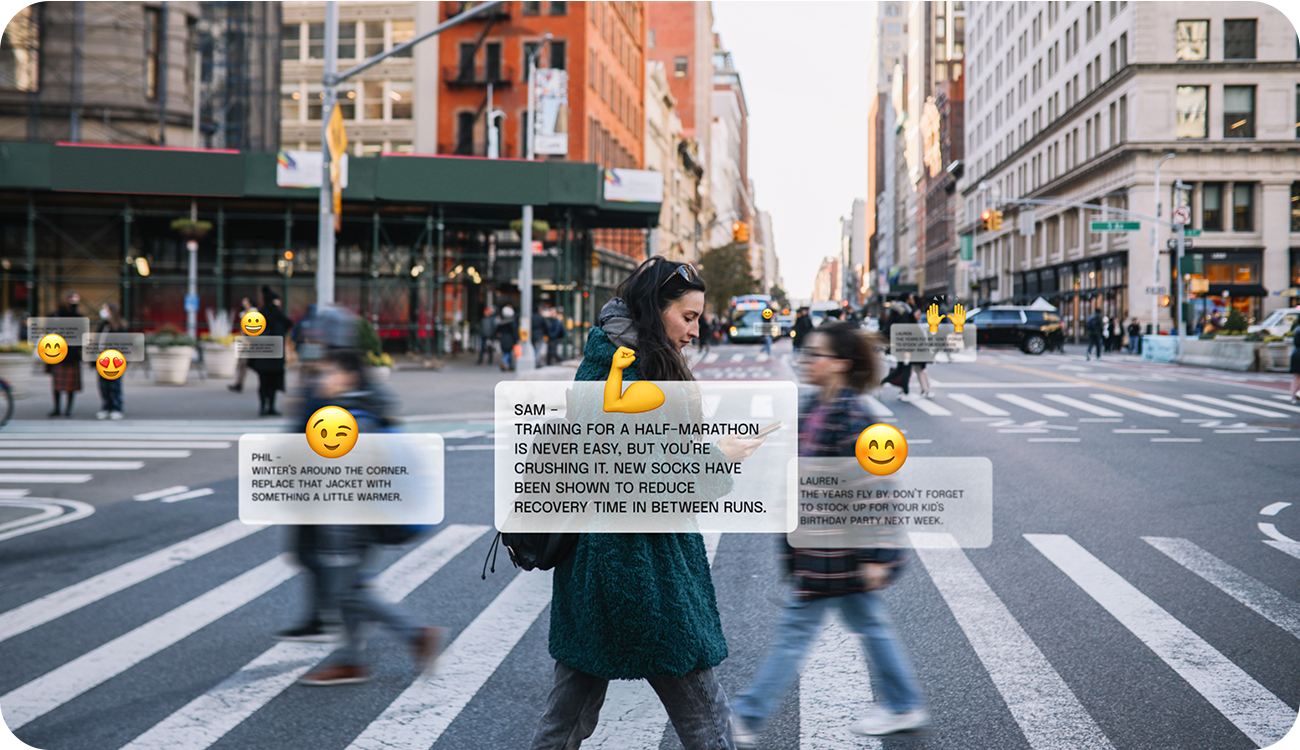
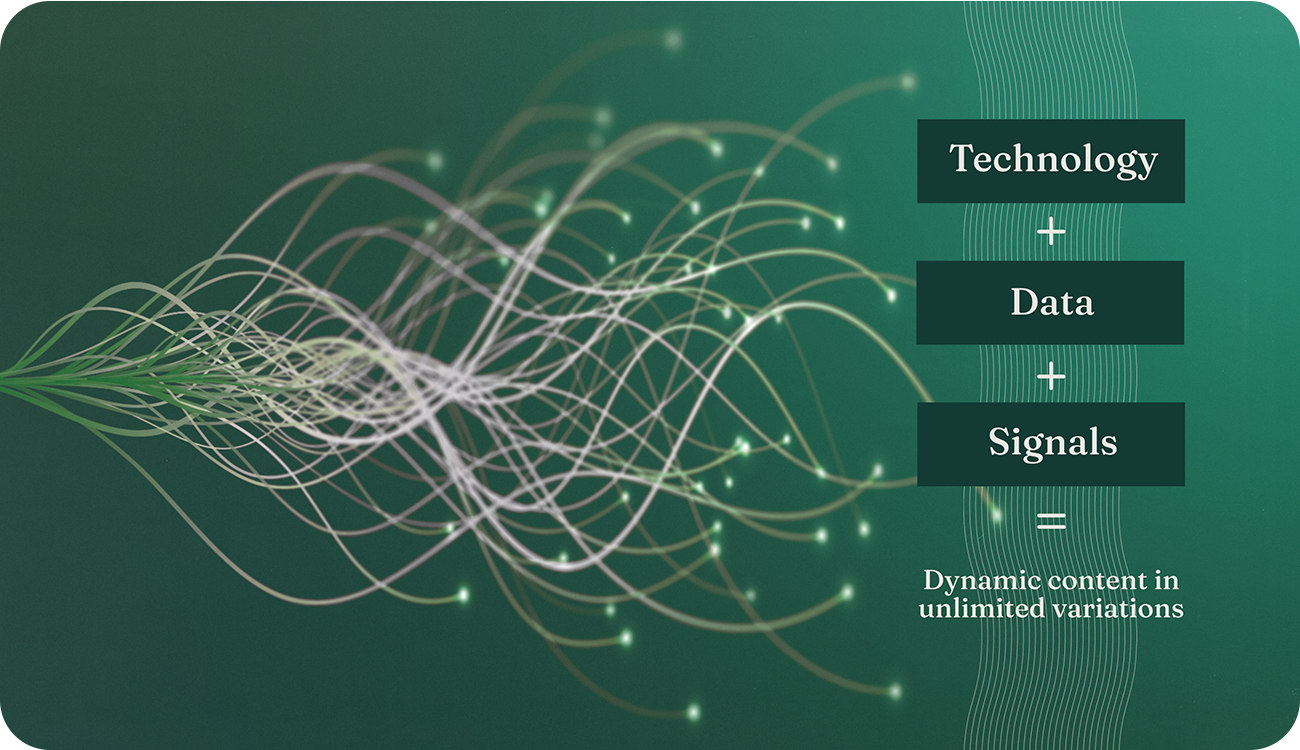
Today, we have the technology—AI, in particular—to make these contextual experiences come to life. We have data and signals to know what a person feels, how they’re accessing content, what the weather is around them, and how they’ve interacted with our brand before.
A consumer’s journey with your brand will no longer be a linear pathway designed by you for a curated persona. Instead, we have many complex and informed moments that are hyper-personalized, holistic, and powered by infinitely individualized data points.
Think of the consumer experience like the Marvel multiverse. There’s one end goal, a single timeline, and infinite variations in how to get there. So how do brands navigate infinite possibilities without losing the plot?
Three shifts stand out:
1. Storytelling through technology: Marketing becomes dynamic storytelling. We’re telling the same brand story—backed by our deep understanding of the person, the jobs to be done, and our value propositions—and we’re telling it in many different ways. Creative and data now move together. The old “left brain vs. right brain” divide no longer applies. Modular content systems let machines remix and reassemble messages in real time, adapting as consumers move between moments.
2. AI as enabler, not answer: To build people-first experiences that value what makes each of us human, we need AI. Let’s be clear: AI isn’t replacing creativity. No, it’s elevating it, becoming the ultimate enabler to scale human empathy. In this post, we’re talking about AI at the moment layer—how it listens, interprets signals, and adapts brand interactions to fit the situation in real time. That’s how it can model and test countless variations of a journey concurrently, something no human team could do.
3. Have a conversation, not a monologue: Traditional channels push messages one way. With AI, interaction becomes a bidirectional conversation where brands listen, respond, and guide consumers in the moment. This back-and-forth builds contextual intelligence and thoughtfully informs a person’s journey.
Brands do still design flows within specific touchpoints, but, in a true ecosystem there’s no single, fixed journey. Instead, AI gives consumers the power of choice – and gives brands the ability to respond with relevance in every moment along a contextual spectrum. No matter how a consumer enters the conversation, brands respond and empower them with the information they need. The result: experiences that feel personal without flattening individuality.
In this new, technology-first era, we must also reframe how we measure success. These shifts are only useful if they build trust between consumers and brands.
Trust: The Real KPI
We need metrics that reflect whether consumers feel understood in their moment. It’s measuring if and how we met consumers along their path, no matter how winding. Here are specific key performance indicators to gauge your brand’s trust level along the contextual spectrum:
Contextual responsiveness: Are we listening? How quickly and accurately do we adjust to consumer signals, pivoting when their context changes?
Choice engagement: Are we empowering, not pushing? How often are consumers choosing the paths that we offer, or are we just shouting into the void?
Trust proxies: Are they coming back for more? This is the real loyalty metric—repeat trust, not just repeat purchases. Are they telling a friend? Are they sticking with their care plan?
I know when a brand I’m looking at online or on social media serves me with a personalized piece of content tailored to my role, emotion, and urgency, they earn my trust. They show they know me on a wholly different level than ever before. I’m not a data point, but a real human with unique qualities and needs.
How to Lead in the Contextual Era
In today’s digital landscape, the concept of omnichannel is no longer sufficient. It’s not about being on every channel hoping consumers follow a clearly laid out journey. Instead, it’s about putting the person at the center of all we do—it’s about context and meeting that consumer where they are in a hyper-personalized way.
In the near future, context will extend beyond device and location. Wearables will infer stress levels, cars will detect fatigue, and smart homes will anticipate needs. Marketing in this era will be about joining conversations consumers are already having with their environments. The contextual spectrum is already expanding what brands can do. Is your brand expanding with it?
For marketing leaders, the takeaway is clear: stop investing in rigid journey maps and static personas as your north star. Instead, build modular creative systems that can flex with context, pair your creatives with data scientists, and measure success by how well you meet consumers in their moment—not how neatly they followed your funnel.
The leaders who embrace this shift will earn trust, loyalty, and outcomes that matter.