At this year’s HLTH conference, one theme was impossible to ignore: AI adoption throughout healthcare is accelerating. Beneath the buzz, another message stood out. Leaders must embrace how AI changes care—this can unlock its potential to enhance connection and trust.
Trust is healthcare’s foundation, and that trust is built on connection—between patient and clinician, health system and community, and payers, providers, and pharma. Our world is becoming more digital and, paradoxically, the more we lean on technology, the more human our interactions will become. In other words, by increasing our use of technology, especially AI, we’re increasing our ability to connect person to person.
AI as Co-Architect: Delivering a More Human Experience
One HLTH speaker captured it perfectly, “AI will raise the floor of what’s possible, and humans will raise the ceiling.” Technology can take on mundane or tedious tasks, streamline workflows, and surface advanced insights in seconds, freeing clinicians to bring empathy, intuition, and meaning back into their work.
At MERGE, we view AI as a co-architect, a valuable team member that helps healthcare organizations rediscover and tap into the human side of health. AI can break down dense, jargon-heavy content for patients and translate complex medical information into accessible content. This leaves room for real conversations.
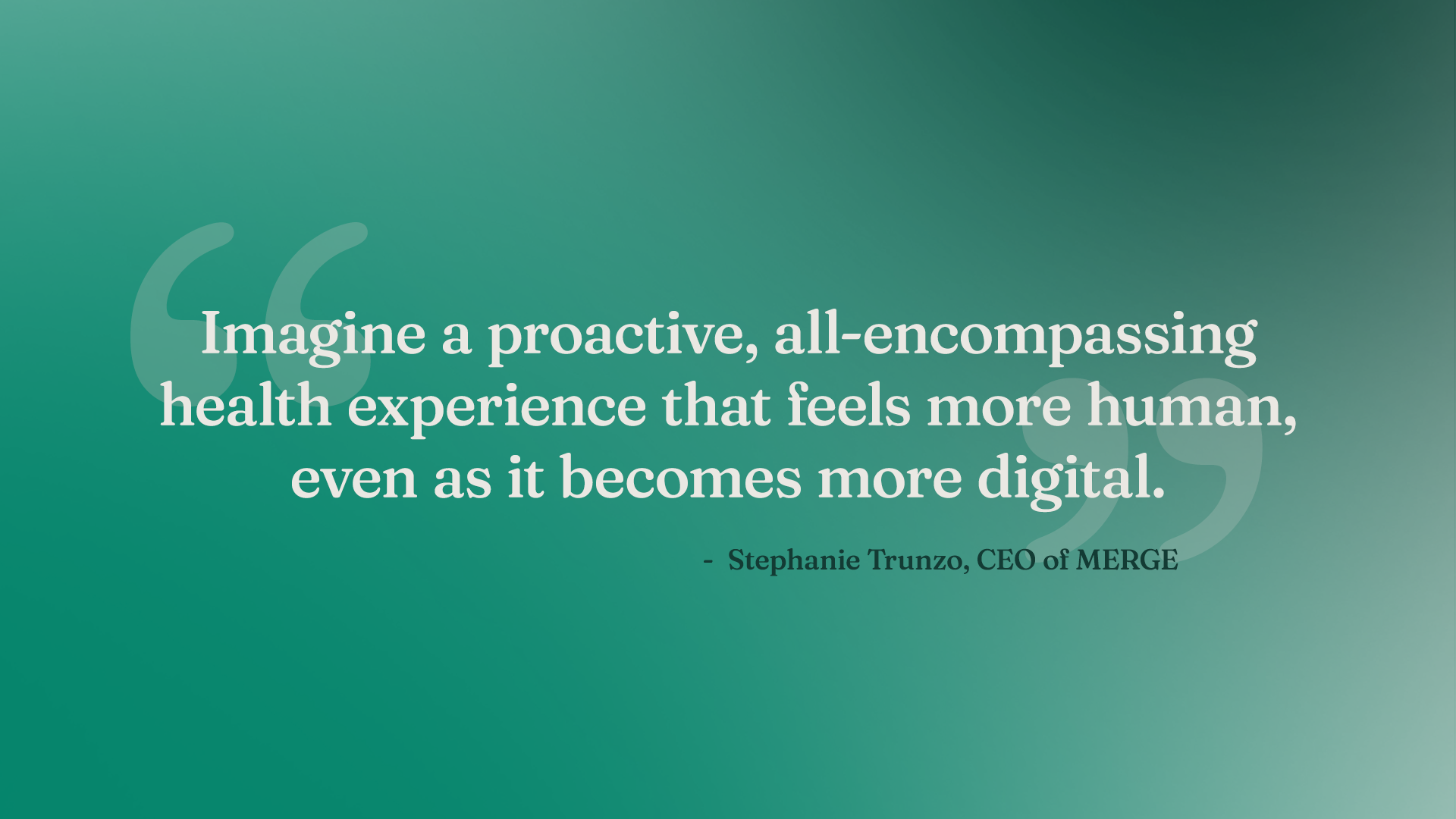
As Stephanie Trunzo, CEO of MERGE, states, “Imagine a proactive, all-encompassing health experience that feels more human, even as it becomes more digital.”
But we’re not there yet. Even as technology improves access and efficiency, people are feeling more isolated, anxious, and unseen. Connection across generations has become one of our scarcest resources—the most meaningful innovation in healthcare isn’t faster AI, it’s deeper empathy, scaled through AI.
The Crisis of Connection: Bridging Loneliness Through Empathy and AI
Throughout HLTH, we heard countless conversations about rising anxiety and the loneliness epidemic, underscoring a crisis of connection. Healthcare, as we know, is facing a shortage of clinicians, especially in the mental and behavioral health spaces. The ratio of people needing care to those able to deliver is staggering, and over half of U.S. counties lack even a single practicing psychiatrist.
Lack of connection is more than a mental-health issue; it’s a systemic one. This is where AI-driven tools can actually help us build relationships. AI-powered coaches, chat companions, and adaptive care experiences can create bridges where human touchpoints are limited. The key is ensuring they’re built with empathy, intention, and evidence—designed to connect, not just communicate.
AI won’t heal disconnection on its own, but it can help clinicians, organizations, and patients close the gap between information and empathy. When technology is built to address these unmet human needs, inspired by whole human insights, it becomes more than just another tool.
When people feel connected, they’re more likely to engage in their own well-being. And that brings us to the next frontier in healthcare’s evolution: not just helping people live longer, but helping them live well.
From Lifespan to Healthspan: Redefining What It Means to Live Well
That shift from lifespan to healthspan resonated throughout HLTH; it’s time for healthcare organizations to embrace that health happens everywhere.
Our industry’s next metric is years lived well, not just years lived. To achieve that, we must reframe outcomes to reflect vitality, autonomy, and purpose—and move upstream from acute care toward proactive, preventive medicine. Nowhere is this more evident than in women’s health, where proactive health management took center stage at HLTH.
As expected, behavior change is the hardest part of this shift, and can be addressed through nudges with wearable technology from Oura, Garmin, and Whoop. These data-driven insights provide real-time data and empower people to make better decisions.
Tom Hale, CEO of Oura, a MERGE client, shared, “Care isn’t just happening in the clinic. It’s happening wherever the patient is.”
For marketers, this further blurs the line between patient and consumer. Where does one role end and one begin? The answer is, there is no clear line. By redefining what it means to live well, we’re signaling that we understand people are on a continuous health journey.
This insight echoes findings from our 2025 Consumer Sentiment Study, The Health Revolution: Empowered by Your Experience. Of respondents who use digital health tools regularly, 74% see themselves as being on a journey of personal transformation regarding their health and wellness. This group is much more likely to be proactive, healthier, and engage with digital health tools.
We need digital health systems that learn who we are, anticipate what we need, nudge us toward positive behavior change, and evolve alongside us. As AI interprets data and humans interpret meaning, “healthspan” becomes the space where both thrive.
The Generational Imperative: Designing for Meaning Across Ages
Living well doesn’t look the same for everyone, and healthspan is shaped by life stage, priorities, and expectations. To truly deliver on this promise, healthcare experiences must reflect the generational nuances that define what “well” means to each of us.
Healthcare is deeply personal. Not only do we have different goals for our current health status, but we also have varying preferences for how we engage with the system. Each of us experiences healthcare in our own way, and oftentimes this is revealed as a generational divide.
Here are a few takeaways from HLTH on what different cohorts want from their health engagement:
- Baby Boomers want validation—proof that their effort and experience are seen.
- Gen X values efficiency and integration—care that fits their lifestyle.
- Millennials demand relevance, simplicity, and authenticity—experiences that feel human, not clinical.
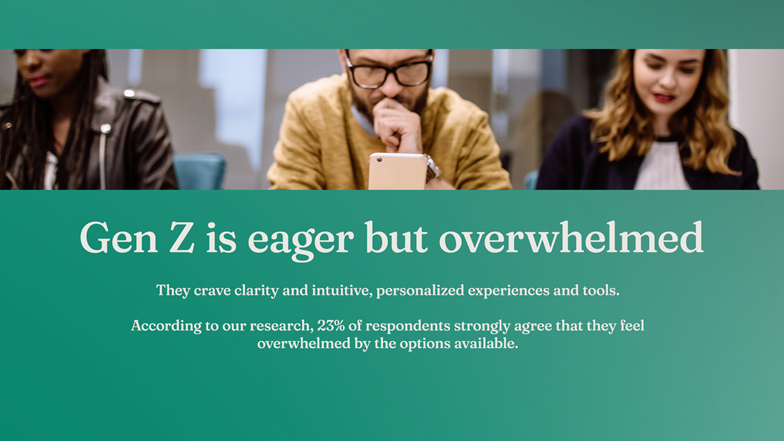
- Gen Z is eager but overwhelmed—they crave clarity and intuitive, personalized experiences and tools. According to our research, 23% of respondents strongly agree that they feel overwhelmed by the options available.
At MERGE, we believe when healthcare meets people in their context and understands their unique needs, emotions, and motivations, it stops feeling like a system and starts feeling like a relationship.
We build trust and connection. That’s the opportunity in front of us.
Stay in touch
Healthcare’s ongoing transformation is being guided by those who humanize technology. When empathy guides intelligence, we raise not just the floor of care—but the ceiling of possibility.
At MERGE, we’re helping organizations blend data with design and insight with emotion to build a more connected, compassionate system of health.
For a deeper look at how consumers’ values are reshaping healthcare, and how brands can build trust, connection, and personalized experiences that last, explore insights from MERGE’s latest research: The Health Revolution: Empowered by Your Experience.